Checklist for Pittsburgh Web Design Success


Your website is your business’s digital front door. For Pittsburgh businesses, an effective website means more than just aesthetics - it’s about building trust, driving traffic, and converting visitors into customers. Here’s what you need to know:
Modern Design Matters: 75% of users judge a business’s credibility by its website. A mobile-friendly, responsive design is a must, with over 60% of web traffic coming from mobile devices.
Common Issues in Pittsburgh: 60% of local websites struggle with mobile usability, and 45% lack SSL certificates, leading to poor user experiences and security risks.
Platform Choice is Key: Platforms like Framer outperform older systems like WordPress or Wix, offering faster performance and easier maintenance.
Local SEO: Target Pittsburgh-specific keywords, optimize your Google My Business profile, and build local trust signals to rank higher in search results.
Maintenance is Non-Negotiable: Regular audits, image optimization, and security updates keep your site fast, secure, and user-friendly.
Bottom Line: A modern, secure, and user-focused website can make or break your business in Pittsburgh’s competitive market. Follow this checklist to stay ahead.
Website Planning for Pittsburgh Businesses
Creating a successful website starts with thoughtful planning that bridges your business goals and your customers' needs. This foundation sets the tone for every decision you’ll make as you move forward. Here’s a closer look at the essential steps.
Define Business Goals and Target Audience
Your website should have a clear purpose that directly contributes to your revenue. For Pittsburgh businesses, this means identifying whether the site’s primary goal is lead generation, online reservations, direct sales, or something else entirely.
For service-based businesses like accounting firms or contractors, lead generation is a game-changer. Your website can act as a round-the-clock tool to capture contact details, schedule consultations, and nurture potential clients. On the other hand, e-commerce businesses benefit from a smooth checkout process that minimizes cart abandonment and builds trust with local customers.
Understanding your Pittsburgh audience is key. Dive into their browsing habits, preferred devices, and what motivates them to take action. Pittsburgh customers often appreciate businesses that reflect the community’s character and values, so weaving local insights into your website strategy can make a big impact.
Research Local Competitors
Your competitors’ websites can be a goldmine of information about what works - and what doesn’t - in the Pittsburgh market. Start by identifying 5–10 local competitors using Google searches and online directories. Then, take a deep dive into their website design, navigation, and calls-to-action.
Pay attention to how they incorporate local imagery and highlight their Pittsburgh roots. Tools like SEMrush or Ahrefs can help you uncover the keywords they rank for and analyze where their traffic comes from. Look for gaps in their approach. Are their websites mobile-friendly? Is important information easy to find? Spotting these weaknesses can help you differentiate your site and offer a better user experience. Once you’ve analyzed the competition, you’ll be ready to choose the technology that best suits your needs.
Select the Right Platform and Technology
The platform you choose for your website impacts everything from performance to long-term maintenance. To make the right choice, consider factors like usability, scalability, security, and how often you’ll need to update content.
Think about your business’s specific requirements. Do you need robust e-commerce features, regular content updates, or custom integrations? Custom-built websites work well for businesses that need tailored branding, while template-based platforms are often a good fit for startups with simpler needs.
Among the available options, Framer stands out for Pittsburgh businesses. Its no-code approach allows you to update content easily without needing a developer. Plus, it delivers fast performance with minimal maintenance, which is great for both user experience and search rankings.
Platform | Maintenance Needs | Performance | Features |
|---|---|---|---|
WordPress | High | Moderate | Good |
Squarespace/Wix | Moderate | Moderate | Good |
Framer | Low/Zero | High | Excellent |
Many businesses in Pittsburgh struggle with outdated systems that demand constant updates and technical fixes. Platforms like Framer solve these issues by offering flexibility and strong performance, helping you stay competitive in the online space.
Partnering with a local studio like Striking Alchemy during this phase can be a smart move. They bring Pittsburgh-specific expertise and have connections to trusted professionals for photography, content creation, and other support services. Their local knowledge can help ensure your website resonates with the community while meeting your business goals.
Design and User Experience Requirements
A well-designed website does more than just look good - it functions effectively and connects with visitors in a way that drives real results. For businesses in Pittsburgh, this means creating websites that operate seamlessly across all devices while reflecting the values and expectations of the local community. This approach ensures your site not only looks appealing but also delivers the fast, relevant online experience that Pittsburgh users expect.
Build Mobile-First Responsive Design
Over 60% of website traffic in the U.S. comes from mobile devices, making mobile-first design a necessity. Your website needs to perform effortlessly, whether someone is scrolling on their smartphone or browsing on a desktop.
Start by designing for the smallest screens first, then scale up for tablets and desktops. This ensures your key features and content work across all devices. For touch navigation, buttons should be at least 44x44 pixels, and text should remain legible without zooming.
Testing on actual devices is critical. Mobile users expect fast load times - aim for under 3 seconds. Images should resize automatically, menus should collapse into hamburger icons for smaller screens, and forms should be thumb-friendly.
"We craft modern, lightning-fast sites that transform your online presence and make navigation effortless, helping you turn visitors into loyal customers."
Striking Alchemy
Responsive design goes beyond layouts. Your site should adapt everything - images, text, navigation, button placement, and even content priority - based on screen size. Ignoring mobile users could mean losing a significant portion of your audience.
Once your mobile performance is solid, shift your attention to creating clear navigation and effective calls to action.
Create Clear Navigation and Call-to-Action Buttons
Navigation should guide users seamlessly. Use menu items that clearly indicate the content they lead to, and keep your main menu concise - ideally limited to 5–7 items to avoid overwhelming visitors.
Call-to-action (CTA) buttons are your online sales tools, converting visitors into customers. Use action-driven phrases like "Schedule a Consultation", "Get Started", or "Contact Us Today" instead of generic terms. Make your CTAs stand out with contrasting colors that complement your brand, and place them strategically throughout your site so users always know the next step - whether it’s filling out a contact form, calling your Pittsburgh office, or making a purchase.
"We design ecommerce sites that remove friction from the shopping experience. With seamless checkouts and mobile-first design, we streamline the process, helping you sell more and stress less."
Striking Alchemy
For larger, more complex websites, consider breadcrumb navigation to help users keep track of their location and easily backtrack. If your site includes extensive content or product catalogs, robust search functionality is a must. Every extra click increases the risk of losing a visitor, so make it easy for them to find what they need.
Pair intuitive navigation with visuals that reinforce your brand and connect with your audience.
Use Professional Images and Consistent Branding
Incorporating local images is a great way to build trust with your community. Generic stock photos can feel impersonal and fail to create the connection that local customers value.
Authentic photography - showcasing your team, location, or work - helps build trust quickly. Whether you’re running a restaurant or offering professional services, genuine visuals resonate far better than overly polished stock images.
Consistency in branding is equally important. Use the same logo, colors, fonts, and visual style across every page of your site. This reinforces recognition and professionalism. The Rule of Sevens suggests that users need multiple exposures to your brand to build trust, so consistent branding across visits is key.
"We take the time to truly grasp the essence of your brand's unique style and specific goals, enabling us to craft websites that seamlessly combine user-friendliness with visually stunning design - ensuring an exceptional online experience."
Striking Alchemy
To maintain fast load times, optimize all images for web use. Large, uncompressed files can frustrate users, especially on mobile. Use modern image formats and compression tools to strike the right balance between speed and quality.
Your site’s visual hierarchy should naturally guide visitors to the most critical information. Strategic use of white space can reduce cognitive load, making your content easier to digest. Approximately 75% of clients praised top Pittsburgh web design studios for transforming website aesthetics and enhancing user experience.
For a design that truly resonates with Pittsburgh’s community and meets today’s performance standards, consider partnering with a local studio like Striking Alchemy. Their expertise can help you deliver a site that’s both visually appealing and highly functional.
Performance Optimization and Security
A fast and secure website is crucial for keeping Pittsburgh visitors engaged and boosting revenue. For local businesses competing in Pittsburgh's market, slow load times or security issues can directly lead to lost sales and missed opportunities.
Security matters just as much. When users share personal information - whether filling out a form or making a purchase - they need to trust your site. A secure, quick-loading website conveys professionalism and reliability, qualities Pittsburgh customers look for when choosing local businesses. By combining smart design practices with performance and security enhancements, you can create a seamless experience for your users.
Speed Up Your Site with Image and Code Tweaks
One of the easiest ways to speed up your website is by optimizing images. Large, uncompressed files are often the main reason for slow loading times. Tools like TinyPNG or ImageOptim can shrink image sizes by as much as 80% without sacrificing quality.
Switching to next-generation image formats like WebP can also help. These formats compress better than traditional JPEG or PNG files. Additionally, using lazy loading ensures that images not immediately visible on the screen load only when needed, significantly improving initial page load times - especially for image-heavy pages.
On the coding side, minify your CSS, JavaScript, and HTML to cut down load times. Consolidate multiple CSS and JavaScript files to reduce server requests, and remove any unused code. Enabling browser caching is another simple way to speed up repeat visits for your users.
Local success stories show that these optimizations can make a noticeable difference in online sales and user satisfaction.
Secure Your Site with SSL and Reliable Hosting
Installing an SSL certificate is a must. It encrypts data, builds trust with users, and even gives your site an SEO boost. Pair this with secure hosting for a rock-solid foundation.
Choose a hosting provider known for strong security features like firewalls, DDoS protection, and automated backups. Look for guarantees of 99.9% uptime and data centers with redundant systems to minimize downtime. Make sure your host automatically applies security updates and patches, as outdated software can leave your site vulnerable. For added protection, enforce two-factor authentication and implement strong password policies, complete with alerts for unusual activity.
With these measures in place, you’ll not only protect user data but also strengthen your site’s reliability and reputation.
Monitor Uptime and Performance
Even with speed and security optimizations, ongoing performance tracking is essential to maintain your site’s quality. Use tools like UptimeRobot or Pingdom to monitor uptime and get real-time alerts if your site goes down. Even brief outages can hurt sales and damage your reputation, especially during busy times.
Performance monitoring goes beyond uptime. Track metrics like page load times, time to first byte (TTFB), and server response times. Google Analytics can provide insights into where your site might be lagging, showing which pages are slow and where users drop off. Set up automated alerts to quickly address any performance dips.
Don’t forget to keep an eye on security. Monitor for malware, suspicious login attempts, and SSL certificate expiration to stay ahead of potential threats.
For Pittsburgh businesses looking for an all-in-one solution, the local studio Striking Alchemy offers modern website redesigns using Framer. These solutions come with built-in optimizations and security features, letting you focus on growing your business without worrying about the technical side.
Investing in performance and security improvements delivers real benefits: a better user experience, higher search rankings, and increased customer trust. In Pittsburgh’s competitive market, these factors can make all the difference in standing out and succeeding.
Local SEO for Pittsburgh Businesses
Local SEO focuses on connecting with customers in Pittsburgh by emphasizing your business's geographic relevance. When someone types "web design near me" or "Pittsburgh digital marketing" into a search engine, your goal is to have your business appear at the top of the results. This strategy helps you attract customers who are actively searching for services in the area.
What sets local SEO apart from traditional SEO is its focus on location. Search engines prioritize businesses that show strong ties to their local communities. To succeed, you’ll need to optimize for both city-wide and neighborhood-specific searches in Pittsburgh. Start by fine-tuning your keyword strategy to align with how locals search for services.
Target Pittsburgh-Specific Keywords
Understanding how your potential customers search is the first step. Focus on local keywords like "Pittsburgh web design", "Shadyside web design", or "Pittsburgh digital marketing." These area-specific terms often face less competition and are more likely to reach customers who prefer working with businesses nearby.
Tools like Google Keyword Planner and SEMrush can help you identify high-impact local keywords. Research shows that combining service-related terms with Pittsburgh locations creates effective opportunities for targeting.
Service Keyword | Pittsburgh Location | Example Keyword |
|---|---|---|
Web design | Pittsburgh | Pittsburgh web design |
Web design | Allegheny County | Web design Allegheny County |
Web design | Shadyside | Shadyside web design |
Web design | Squirrel Hill | Squirrel Hill web design |
Web design | North Hills | North Hills web design |
Web design | South Side | South Side web design |
Ecommerce | Pittsburgh | Pittsburgh ecommerce |
Digital marketing | Pittsburgh | Pittsburgh digital marketing |
Local SEO | Pittsburgh |
Take a look at your competitors' websites to see how they use local keywords in their page titles, headers, and service descriptions. This can help you spot opportunities to stand out. Once you’ve identified the right keywords, incorporate them naturally into your page titles, meta descriptions, headers, and content. Mention areas like Allegheny County or include testimonials from clients in neighborhoods like Squirrel Hill to make your content more relatable. Just avoid overloading your text with keywords, as search engines penalize this practice.
Optimize Google My Business and Local Listings
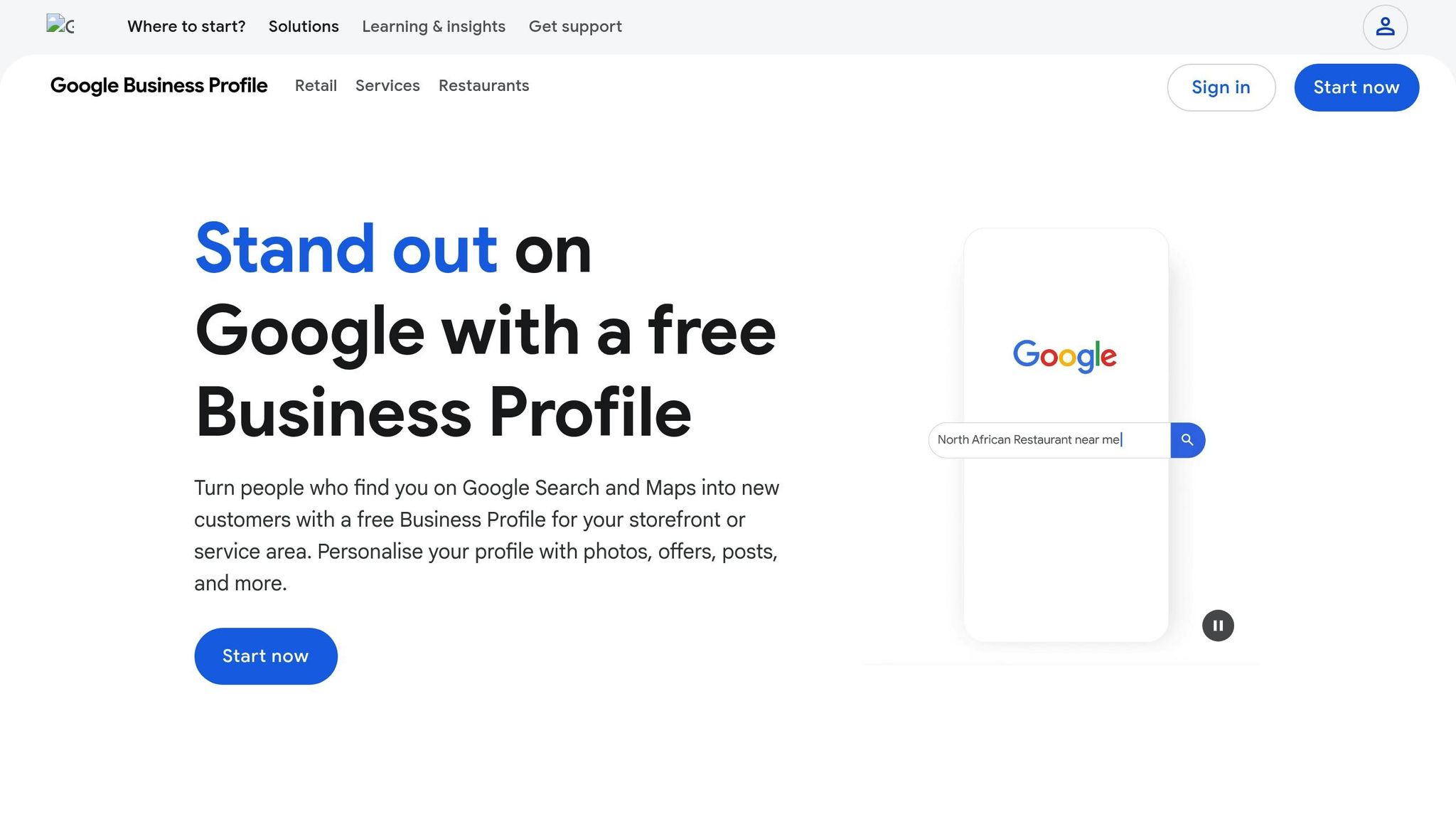
Once you’ve nailed down your keywords, the next step is optimizing your local listings for maximum visibility. Your Google My Business (GMB) profile is often the first thing potential customers see when searching locally. Claim and verify your GMB listing, and make sure the information matches what’s on your website - any inconsistencies can hurt your rankings.
Complete every section of your GMB profile. Choose the most accurate business categories, upload high-quality photos of your team and your work, and write a business description that includes your local keywords. Keep your profile active by posting updates about new services, recent projects, or special offers. Encourage happy customers to leave reviews, and take the time to respond to each one - whether it’s positive or negative - to show that you value feedback and care about your community.
Consistency is key when it comes to your business name, address, and phone number (NAP). Make sure this information is the same across directories like Yelp, Bing Places, Yellow Pages, and the Pittsburgh Chamber of Commerce. Regularly audit your listings to ensure everything stays accurate. Adding structured data markup to your website can also help search engines understand details like your location, hours, and services, giving you an extra edge in local search results.
Add Local Trust Signals
Pittsburgh customers are more likely to choose businesses that have strong local connections and a proven track record. Highlight testimonials from local clients on your website, especially those that mention specific neighborhoods or challenges you’ve helped solve.
Showcase logos of local partners, memberships in Pittsburgh organizations, or awards from area groups. For example, displaying a badge from the Pittsburgh Chamber of Commerce can boost your credibility with both customers and search engines. Including case studies or project highlights that feature well-known Pittsburgh clients can further establish your presence in the community.
Building local backlinks is another way to strengthen your reputation. Partner with other Pittsburgh businesses, sponsor local events, or collaborate with local media to earn links from reputable websites. These backlinks send a strong signal to search engines that your business is relevant to the area.
You can also make your website feel more connected to Pittsburgh by adding photos of your team at recognizable city landmarks or including a map that shows your location. Highlighting the expertise of your staff and their ties to the community can also help build trust with local audiences.
Local SEO isn’t just about rankings - it’s about building trust and engaging with Pittsburgh’s competitive market. Consider working with a local studio like Striking Alchemy to implement these strategies. They specialize in updating outdated websites to modern platforms like Framer, which can improve site speed, enhance user experience, and boost search rankings. Together, these efforts can help your business stand out and thrive in Pittsburgh.
Website Maintenance and Updates
Keeping your website in top shape is crucial for smooth performance, protecting your business from security risks, and delivering a great user experience for your Pittsburgh customers. Websites that are regularly updated attract 2.5 times more traffic than those left unattended, proving that maintenance isn't just about upkeep - it’s a driver of growth.
Think of your website like a storefront. You wouldn’t leave broken windows or outdated signs untouched, right? The same care applies to your digital presence. The good news? With the right tools and strategies, maintaining your website can be efficient and manageable. These practices build on earlier optimizations, ensuring your site stays a reliable asset for your Pittsburgh audience.
Perform Regular Website Audits
A thorough website audit helps catch problems before they affect your visitors or harm your search rankings. Aim to conduct audits at least every quarter, and more frequently if you manage an ecommerce site or handle sensitive customer data.
Start with the technical side. Tools like Google Search Console can help you identify broken links and crawl issues. Check mobile responsiveness and use Google PageSpeed Insights to optimize load times. A one-second improvement in page load time can boost conversion rates by up to 7%. In Pittsburgh’s competitive market, slow-loading pages can drive potential customers to your competitors.
Keep your website’s information current. Update business hours, contact details, and pricing as needed, and refresh seasonal promotions or outdated references. For Pittsburgh businesses, ensure your location details align with what’s listed on Google My Business and other local directories.
Security is non-negotiable. Make sure your SSL certificate is active and up to date. Review user permissions regularly, especially removing access for former employees. 60% of small businesses that experience major security breaches shut down within six months, underscoring the importance of consistent security checks.
Gather User Feedback
Your customers are an invaluable resource for identifying what’s working - and what isn’t - on your site. While analytics provide useful data, direct feedback uncovers usability issues that numbers alone might miss. Create multiple ways for Pittsburgh customers to share their thoughts.
On-site surveys are a simple way to gather quick insights. A pop-up asking visitors about their experience or what they couldn’t find can be highly effective. Keep surveys brief - two or three questions max - to encourage participation. Live chat transcripts also offer a goldmine of information on common questions and challenges.
Analytics tools reveal user behavior patterns. High bounce rates on specific pages may point to issues with content or design. Heat mapping tools can show where users click and how far they scroll, helping you determine if your call-to-action buttons are in the right spots.
Customer service inquiries are another clue. If people frequently call to ask for information that should be on your site, it’s a sign that updates are needed. Likewise, if customers report trouble finding certain pages or completing tasks, prioritize fixing those areas. For example, if users abandon your contact form, test a simpler version with fewer fields. If customers want more details about your Pittsburgh service areas, consider adding a dedicated page highlighting the neighborhoods you serve.
Use Zero-Maintenance Solutions
Traditional platforms like WordPress, Squarespace, and Wix require constant updates, security patches, and backups. These tasks can take time away from growing your business and serving Pittsburgh customers.
Zero-maintenance platforms, such as Framer, simplify this process by automating updates, security monitoring, and performance enhancements in the background. You’ll enjoy the benefits of a fast, modern website without the hassle of manual upkeep. These platforms not only save time but also reduce long-term costs. While the initial investment may be higher, the ongoing expenses are often lower compared to traditional platforms that require frequent developer intervention.
Switching to a zero-maintenance platform is easier than you might think, especially with expert help. Studios like Striking Alchemy specialize in migrating Pittsburgh businesses from older platforms like WordPress or Wix to Framer. They handle the technical details, ensuring your site retains its search rankings and user experience during the transition.
The benefits go beyond convenience. Zero-maintenance platforms often deliver better performance, stronger security, and improved mobile responsiveness - factors that boost search rankings and customer satisfaction. For Pittsburgh businesses facing tough competition, these advantages can make a big difference in attracting and keeping customers.
If you find yourself spending hours each month updating plugins, fixing bugs, or addressing security issues, it might be time to consider a zero-maintenance solution. This shift can free up valuable time for focusing on what matters most: growing your business and serving your customers.
Building a Future-Proof Website
Creating a website that stands the test of time goes beyond just having a sleek design - it requires thoughtful planning, modern tools, and a forward-thinking approach. Future-proof websites are built with flexible content management systems, user-focused design, and responsive layouts, ensuring they remain effective over the long haul. With 62% of global website traffic now coming from mobile devices, these elements are no longer optional but essential for Pittsburgh businesses aiming to stay competitive in the digital arena.
The secret to future-proofing is choosing platforms and technologies that grow alongside your business instead of locking you into costly redesign cycles. Modern websites should be equipped for AI integration, follow the latest security and privacy protocols, and operate on platforms that require minimal maintenance. This approach avoids the traditional pattern of heavy upfront investments followed by gradual decline, only to be remedied by another expensive overhaul.
Growth-Driven Design offers a smarter alternative to outdated development methods. This model focuses on launching a website with core functionality and improving it continuously based on user feedback and data. For Pittsburgh businesses, this means creating sites that can adapt to market changes without the need for frequent, costly redesigns, ultimately delivering measurable results in marketing and sales. It’s a proactive way to ensure your website evolves as your business does.
Work with Experienced Professionals
Once the strategy is set, the next step is partnering with experts who can turn these principles into a website that drives results. Local professionals bring an understanding of Pittsburgh's unique business landscape, enabling them to craft sites tailored to the region's market dynamics.
Take Striking Alchemy, for example - a Pittsburgh-based studio with over 15 years of experience in digital marketing. They specialize in building modern, low-maintenance websites using Framer, a platform designed for long-term performance without the ongoing technical headaches associated with systems like WordPress, Squarespace, or Wix.
"With over 15 years of digital marketing expertise working with a wide variety of clients (from fledgling startups to multimillion-dollar brands), work with an expert who knows how to achieve goals." - Nick, Studio Founder, Striking Alchemy
The right partner should offer a full suite of services, including custom website development, SEO optimization, UX/UI design, and growth-driven strategies. A good professional will start with a comprehensive website health check, benchmarking your site against industry standards, user experience guidelines, and competitor performance. This data-driven approach ensures your website isn't just visually appealing but also optimized to convert visitors into customers.
Striking Alchemy exemplifies this approach by integrating multiple marketing channels into a unified strategy that supports sustained growth. Their expertise in transitioning outdated, sluggish websites to modern platforms like Framer helps Pittsburgh businesses move to efficient, scalable solutions without losing valuable content or SEO rankings.
When selecting a partner, look for studios that excel in mobile-first design, seamless SEO and user experience integration, and data-driven decision-making. The best professionals will also provide ongoing support and iterative improvements through design sprints, rather than sticking to outdated static maintenance models. This kind of collaboration ensures your website stays competitive as technology and user expectations continue to evolve.
For businesses still operating with outdated websites, migrating to modern platforms can eliminate technical debt while preserving your site’s existing content and SEO value. Platforms like Framer, as mentioned earlier, transform your website from a liability into a dynamic asset that grows alongside your business. By making this shift, Pittsburgh companies can ensure their digital presence remains a powerful tool for long-term success.
FAQs
What are the best ways for Pittsburgh businesses to use local SEO to boost their website's search rankings?
To stand out in local search rankings, businesses in Pittsburgh should prioritize optimizing their websites with location-focused keywords. Equally important is ensuring that business details - like your name, address, and phone number - are consistent across all online platforms. Don’t overlook the power of claiming and regularly updating your Google Business Profile, as it plays a key role in showing up in local search results and on Google Maps.
Another effective approach is adding locally relevant content to your site. Think blog posts or landing pages specifically designed for Pittsburgh audiences. These not only boost engagement but also strengthen your connection with the local community. For expert help, a studio like Striking Alchemy can work with you to build a tailored local SEO strategy, making it easier for your business to get noticed online and reach your neighbors.
What are the advantages of using a zero-maintenance platform like Framer for web design in Pittsburgh?
Using a platform like Framer that requires no ongoing maintenance can be a game-changer for Pittsburgh businesses. It takes the hassle out of dealing with updates, security patches, or complicated upkeep, freeing up both time and resources. Plus, Framer is built to meet modern performance standards, delivering faster load times and a seamless user experience - two factors that can directly improve engagement and drive more conversions.
What’s more, Framer offers a solution that’s built to stand the test of time. Unlike traditional platforms that often come with limitations and inefficiencies, Framer prioritizes simplicity and performance. This means businesses can enjoy a sleek, professional online presence without the burden of constant maintenance.
Why is mobile-first responsive design important for Pittsburgh businesses, and how does it impact user experience and conversions?
For businesses in Pittsburgh, adopting a mobile-first responsive design is no longer optional - it's a must. With smartphones and tablets becoming the go-to devices for online browsing, having a site that works effortlessly across various screen sizes is critical. A responsive design ensures your website adjusts perfectly, offering users a smooth and frustration-free experience.
When you prioritize mobile-first design, you’re not just improving how your site looks. You’re also enhancing navigation, speeding up load times, and creating a layout that grabs attention and keeps visitors interested. The result? Happier users who are more likely to take action - whether that’s making a purchase, scheduling an appointment, or reaching out to your business. It’s a win-win for user satisfaction and conversion rates.